Sam Roy Hagar (born October 13, 1947), also known as the Red Rocker,[1] is an American singer, songwriter, and guitarist. In the early 1970s he was a member of the hard rock band Montrose before launching a solo career, scoring a hit in 1984 with “I Can’t Drive 55“. He replaced David Lee Roth as the second lead vocalist of Van Halen in 1985, but left in 1996. He returned to the band from 2003 to 2005. In 2007, Hagar was inducted into the Rock and Roll Hall of Fame as a member of Van Halen. His musical style primarily consists of hard rock and heavy metal.[2][3][4][5][6]
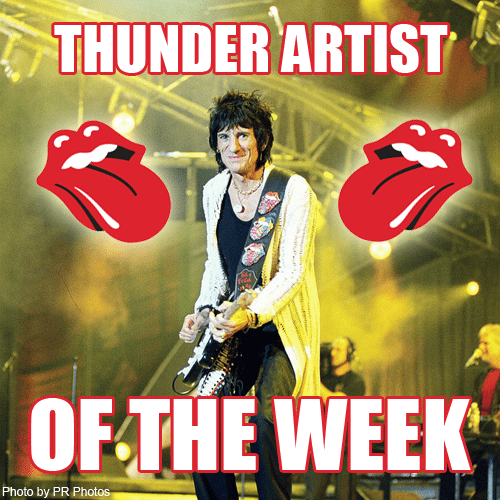
The Rolling Stones are an English rock band formed in London in 1962. Active for over six decades, they are one of the most popular and enduring bands of the rock era. In the early 1960s, the Rolling Stones pioneered the gritty, rhythmically driven sound that came to define hard rock. Their first stable line-up consisted of vocalist Mick Jagger, multi-instrumentalist Brian Jones, guitarist Keith Richards, bassist Bill Wyman, and drummer Charlie Watts. During their formative years, Jones was the primary leader: he assembled the band, named it, and drove their sound and image. After Andrew Loog Oldham became the group’s manager in 1963, he encouraged them to write their own songs. Jagger and Richards became the primary creative force behind the band, alienating Jones, who had developed a drug addiction that interfered with his ability to contribute meaningfully.
Jones left the band shortly before his death in 1969, having been replaced by guitarist Mick Taylor. That year they were first introduced on stage as “The Greatest Rock and Roll Band in the World“. Sticky Fingers (1971), which yielded “Brown Sugar” and included the first usage of their tongue and lips logo, was their first of eight consecutive number-one studio albums in the US. Exile on Main St. (1972), featuring “Tumbling Dice“, and Goats Head Soup (1973), yielding the hit ballad “Angie“, were also best sellers. Taylor was replaced by Ronnie Wood in 1974. The band continued to release successful albums, including their two largest sellers: Some Girls (1978), featuring “Miss You“, and Tattoo You (1981), featuring “Start Me Up“. Steel Wheels (1989) was widely considered a comeback album and was followed by Voodoo Lounge (1994), a worldwide number-one album. Both releases were promoted by large stadium and arena tours, as the Stones continued to be a huge concert attraction; by 2007 they had recorded the all-time highest-grossing concert tour three times, and as recently as 2021 they were the highest-earning live act of the year. From Wyman’s departure in 1993 to Watts’ death in 2021, the band continued as a four-piece core, with Darryl Jones playing bass on tour and on most studio recordings, while Steve Jordan became their touring drummer following Watts’ death. Their 2016 album, Blue & Lonesome, became their twelfth UK number-one album.
Following a change in line-up and musical direction in 1972, the band experimented with elements of jazz fusion on Caravanserai (1972), Welcome (1973), and Borboletta (1974). Santana reached a new peak of commercial and critical success with Supernatural (1999) and its singles “Smooth“, featuring singer Rob Thomas, and “Maria Maria” featuring The Product G&B. The album reached No. 1 in eleven countries and sold 12 million copies in the US alone. In 2014, the “classic” line-up reunited for Santana IV (2016) and the group continue to perform and record.
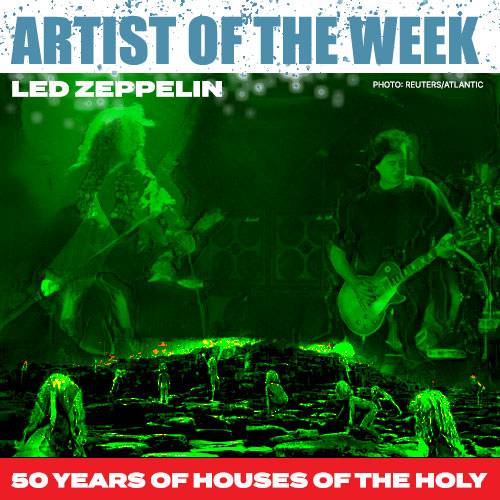
The album benefited from two band members installing studios at home, which allowed them to develop more sophisticated songs and arrangements and expand their musical style. Several songs subsequently became fixtures in the group’s live set, including “The Song Remains the Same“, “The Rain Song” and “No Quarter“. Other material recorded at the sessions, including the title track, was shelved and released on the later albums Physical Graffiti and Coda. All instruments and vocals were provided by the band members Robert Plant (vocals), Jimmy Page (guitar), John Paul Jones (bass, keyboards), and John Bonham (drums). The album was produced by Page and mixed by Eddie Kramer.
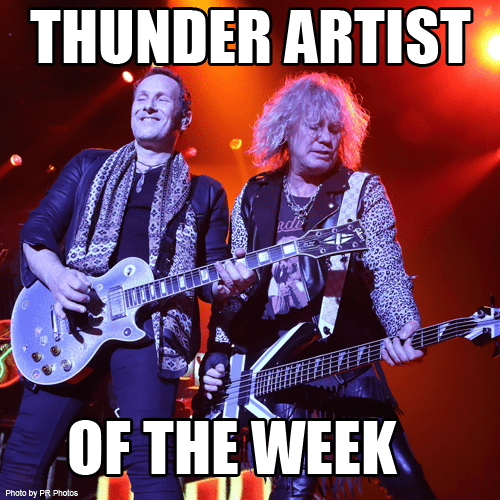
Def Leppard are an English rock band formed in Sheffield in 1976. Since 1992, the band has consisted of Rick Savage (bass, backing vocals), Joe Elliott (lead vocals), Rick Allen (drums), Phil Collen (guitar, backing vocals), and Vivian Campbell (guitar, backing vocals). They established themselves as part of the new wave of British heavy metal of the early 1980s. Their greatest commercial success came between the early 1980s and mid–1990s.
With a line-up of Savage, Elliott, Allen and guitarists Steve Clark and Pete Willis, the band’s first album, 1980’s On Through the Night, reached the Top 15 in the UK but received little notice elsewhere. Their second album, 1981’s High ‘n’ Dry, was produced by Mutt Lange, who helped them to define their melodic hard rock style. The album’s most popular track “Bringin’ On the Heartbreak” became one of the first rock videos played on MTV in 1982, but the album reached only the Top 30 and 40 in the UK and US. Willis was replaced by Collen in 1982. Their next studio album, Pyromania, was released in January 1983, with “Photograph” and “Rock of Ages” both topping the US Rock Tracks chart and reaching the top 20 of the Hot 100. Reaching No. 2 on the US album chart, Pyromania was certified Diamond in the US. It reached the top 20 in the UK but did not sell much elsewhere.
The band’s fourth album, the more pop-oriented Hysteria (1987), sent Def Leppard into the stratosphere, and made them the most popular band in the world at the time. “Hysteria” topped the UK, US, Canadian and Australian charts, and remained on the charts for over Two years, from 1987 to 1989. It has been certified 12× platinum for sales in the US, selling over 30 million copies worldwide to date, making it one of the best-selling albums of all time, and the highest selling glam rock album to date.[1] It spawned six Top 20 US singles, including the US Billboard Hot 100 No. 1 “Love Bites“, alongside “Pour Some Sugar on Me” (US No. 2), “Hysteria“, “Armageddon It“, “Animal” (at No. 6, the biggest UK hit), and “Rocket” (a Top 15 hit in many countries).
Clark died in 1991, with the band recording their next studio album, Adrenalize, as a four-piece. The album reached No. 1 on the UK, US and Australian charts in 1992. It contained several hits, including the Billboard chart-topper “Let’s Get Rocked“, which became their biggest hit in several countries, including No. 2 in the UK. The third single, “Have You Ever Needed Someone So Bad“, was a Top 10 song in the US, UK and Canada. Adrenalize went on to sell over eight million copies worldwide. Campbell joined the band soon after the album’s completion. Their 1993 album, Retro Active, contained the acoustic Top 5 hit “Two Steps Behind“. Their greatest-hits album Vault, released in 1995, featured the UK No. 2 hit “When Love & Hate Collide” and reached the Top 10 in several countries, going 5× platinum in the US. Beginning with Slang, Def Leppard released five albums between 1996-2008, with most usually reaching the Top 15 in several countries, including the UK, US and Canada. Their self-titled album, released in 2015, reached the Top 10 in several countries. Their newest studio album, Diamond Star Halos, was released in May 2022 and reached the Top 10 in the US, UK and Australia, and soon became the band’s highest rated and best selling album since Adrenalize in 1992.
As one of the world’s best-selling music artists, Def Leppard have sold more than 100 million records worldwide,[2] and have two albums with RIAAdiamond certification: Pyromania and Hysteria,[3] making them one of only five rock bands with two original studio albums selling more than 10 million copies in the US.[4][5] The band were ranked No. 31 in VH1‘s “100 Greatest Artists of Hard Rock”[6] and No. 70 in “100 Greatest Artists of All Time”.[7] They were inducted into the Rock and Roll Hall of Fame in 2019.[8]
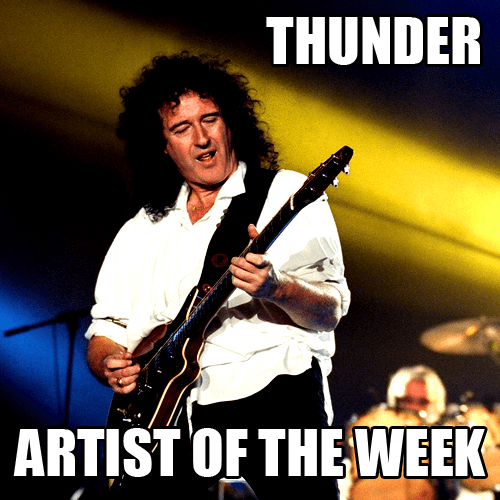
Queen are a British rock band formed in London in 1970 by Freddie Mercury (lead vocals, piano), Brian May (guitar, vocals), and Roger Taylor (drums, vocals), later joined by John Deacon (bass). Their earliest works were influenced by progressive rock, hard rock, and heavy metal, but the band gradually ventured into more conventional and radio-friendly works by incorporating further styles, such as arena rock and pop rock.
Before forming Queen, May and Taylor had played together in the band Smile. Mercury was a fan of Smile and encouraged them to experiment with more elaborate stage and recording techniques. He joined in 1970 and suggested the name “Queen”. Deacon was recruited in February 1971, before the band released their self-titled debut album in 1973. Queen first charted in the UK with their second album, Queen II, in 1974. Sheer Heart Attack later that year and A Night at the Opera in 1975 brought them international success. The latter featured “Bohemian Rhapsody“, which stayed at number one in the UK for nine weeks and helped popularise the music video format. The band’s 1977 album News of the World contained “We Will Rock You” and “We Are the Champions“, which have become anthems at sporting events. By the early 1980s, Queen were one of the biggest stadium rock bands in the world. “Another One Bites the Dust” from The Game (1980) became their best-selling single, while their 1981 compilation album Greatest Hits is the best-selling album in the UK and is certified nine times platinum in the US. Their performance at the 1985 Live Aid concert is ranked among the greatest in rock history by various publications. In August 1986, Mercury gave his last performance with Queen at Knebworth, England.
Though he kept his condition private, Mercury was diagnosed with AIDS in 1987. The band released two more albums, The Miracle in 1989 and Innuendo in 1991. On 23 November 1991, Mercury publicly revealed that he had AIDS, and the next day died of bronchopneumonia, a complication of AIDS. One more album was released featuring Mercury’s vocal, 1995’s Made in Heaven. John Deacon retired in 1997, while May and Taylor continued to make sporadic appearances together. Since 2004, they have toured as “Queen +”, with vocalists Paul Rodgers and Adam Lambert.
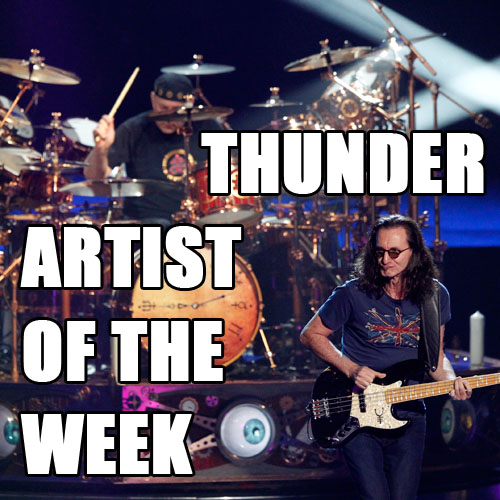
Rush was a Canadian rock band formed in 1968 in Toronto, that was comprised primarily of Geddy Lee (bass, vocals), Alex Lifeson (guitar), and Neil Peart (drums, percussion, lyricist). The band was formed in Toronto in 1968 by Lifeson, drummer John Rutsey, and bass guitarist/vocalist Jeff Jones, who was immediately replaced by Lee. After Lee joined, the band went through several line-up configurations before arriving at its classic power trio line-up with the addition of Peart in July 1974, who replaced Rutsey four months after the release of their self-titled debut album; this line-up remained intact for the remainder of the band’s career.
Rush achieved commercial success in the 1970s with Fly by Night (1975), 2112 (1976), A Farewell to Kings (1977) and Hemispheres (1978). The band’s popularity continued throughout the 1980s and 1990s, with albums charting highly in Canada, the US and the UK, including Permanent Waves (1980), Moving Pictures (1981), Signals (1982), Grace Under Pressure (1984) and Counterparts (1993). Rush continued to record and perform until 1997, after which the band entered a four-year hiatus due to personal tragedies in Peart’s life. The trio regrouped in 2001 and released three more studio albums: Vapor Trails (2002), Snakes & Arrows (2007), and Clockwork Angels (2012). Rush ceased touring at the end of 2015, and Lifeson announced in January 2018 that the band would not continue,[9][10] which was cemented by Peart’s death from glioblastoma, a type of brain cancer, on January 7, 2020, at the age of 67.[11]
Rush were known for their musicianship, complex compositions and eclectic lyrical motifs drawing heavily on science fiction, fantasy and philosophy. The band’s style changed over the years, from a blues-inspired hard rock beginning, later moving into progressive rock, then a period in the 1980s marked by heavy use of synthesizers, before returning to guitar-driven hard rock at the end of the 1980s. Their final work from 2012, marked a return to progressive rock. The members of Rush have been acknowledged as some of the most proficient players on their respective instruments, with each winning numerous awards in magazine readers’ polls over the years.
As of 2022, Rush ranks 84th in the U.S. with sales of 26 million albums[12] and industry sources estimate their total worldwide album sales at over 42 million. Rush has been awarded 14 platinum and 3 multi-platinum albums in the US[13] plus 17 platinum albums in Canada. Rush was nominated for seven Grammy Awards,[14] won several Juno Awards, and won an International Achievement Award at the 2009 SOCAN Awards.[15] The band was inducted into the Canadian Music Hall of Fame in 1994 and the Rock and Roll Hall of Fame in 2013.[16][17]
Heart is a rock band which started in Seattle in the 1960s. It became famous with the release of “Dreamboat Annie” in 1976 when the band-members were living in Vancouver.
Heart was started by Steve Fossen and brothers Roger and Mike Fisher in Seattle. Ann Wilson joined the band in Seattle in 1970. Nancy Wilson joined the band in 1974. From then, Ann and Nancy wrote almost all of the band’s songs. From 1976, the band was very successful, and sold many millions of records.
Ann Wilson was the lead singer and sometimes played the flute. Roger Fisher played the lead guitar and sang. Steve Fossen played the bass guitar. Nancy Wilson played lots of different types of guitar and sang. Mike Fisher managed the band and also looked after the sound and the lights. In 1975 some extra people joined the band. Michael DeRosier played the drums. Howard Leese played lots of different instruments and stayed with the band until 1998.
The Fisher brothers left the band in 1979. Steve Fossen and Michael DeRosier left the band in 1982. Denny Carmassi played the drums, Mark Andes played the bass guitar, and Nancy Wilson played the lead guitar. The band did not do much in the 1990s, but Ann & Nancy started doing things again in the early 2000s. Since then, the band has made lots of appearances in public and on TV.
Eric Patrick Clapton, CBE (born 30 March 1945) is an English rock and blues guitarist, singer, and songwriter. He is the only three-time inductee to the Rock and Roll Hall of Fame: once as a solo artist and separately as a member of the Yardbirds and of Cream. Clapton has been referred to as one of the most important and influential guitarists of all time.[2] Clapton ranked second in Rolling Stone‘s list of the “100 Greatest Guitarists of All Time“[3] and fourth in Gibson‘s “Top 50 Guitarists of All Time”.[4] He was also named number five in Time magazine’s list of “The 10 Best Electric Guitar Players” in 2009.[5]
After playing in a number of different local bands, Clapton joined the Yardbirds in 1963, replacing founding guitarist Top Topham. Dissatisfied with the change of the Yardbirds sound from blues rock to a more radio-friendly pop rock sound, Clapton left the Yardbirds in 1965 to play with John Mayall & the Bluesbreakers, with whom he played on one album. After leaving Mayall in 1966, Clapton formed the power trio Cream with drummer Ginger Baker and bassist Jack Bruce, in which Clapton played sustained blues improvisations and “arty, blues-based psychedelic pop”.[6] After Cream broke up, he formed blues rock band Blind Faith with Baker, Steve Winwood, and Ric Grech, recording one album and performing on one tour before they broke up, leading Clapton to embark on a solo career in 1970. Alongside his solo career, he also performed with Delaney & Bonnie and Derek and the Dominos, with whom he recorded “Layla“, one of his signature songs. He continued to record a number of successful solo albums and songs over the next several decades, including a 1974 cover of Bob Marley‘s “I Shot the Sheriff” (which helped reggae reach a mass market.[7]), the country-infused Slowhand album (1977) and the pop rock of 1986’s August. Following the death of his son Conor in 1991, Clapton’s grief was expressed in the song “Tears in Heaven“, which appeared on his Unplugged album, and in 1996 he had another top-40 hit with the R&B crossover “Change The World“, and in 1998 released the Grammy award winning “My Father’s Eyes“. Since 1999, he has recorded a number of traditional blues and blues rock albums and hosted the periodic Crossroads Guitar Festival. His most recent studio album is 2018’s Happy Xmas.
ZZ Top[a] is an American rock band formed in 1969 in Houston, Texas. For 51 years, it was composed of vocalist-guitarist Billy Gibbons, drummer Frank Beard and bassist-vocalist Dusty Hill, until Hill’s death in 2021. ZZ Top had developed a signature sound based on Gibbons’ blues guitar playing style and Hill and Beard’s rhythm section. They are popular for their live performances, sly and humorous lyrics, and the matching appearances of Gibbons and Hill, who wore sunglasses, hats and long beards.
After a hiatus, ZZ Top returned in 1979 with a new musical direction and image, with Gibbons and Hill wearing sunglasses and matching chest-length beards. With the album El Loco (1981), they began to experiment with synthesizers and drum machines. They established a more mainstream sound and rose to international stardom with Eliminator (1983) and Afterburner (1985), which integrated influences from new wave, punk, and dance-rock. The popularity of these albums’ music videos, including those for “Gimme All Your Lovin’“, “Sharp Dressed Man“, and “Legs“, gave them mass exposure on television channel MTV and made them prominent artists in 1980s pop culture. The Afterburner tour set records for the highest-attended and highest-grossing concert tour of 1986.
After gaining additional acclaim with the release of their tenth album Recycler (1990), and its accompanying tour, the group’s experimentation continued with mixed success on the albums Antenna (1994), Rhythmeen (1996), XXX (1999), and Mescalero (2003). They most recently released La Futura (2012) and Goin’ 50 (2019), a compilation album commemorating the band’s 50th anniversary. By the time of Hill’s death in 2021, ZZ Top had become the longest-running band with an unchanged lineup in the history of popular music.[1] Per Hill’s wishes, he was replaced by their longtime guitar tech Elwood Francis on bass.